 Eastmans' Official Blog | Mule Deer, Antelope, Elk Hunting and Bowhunting Magazine | Eastmans' Hunting Journals
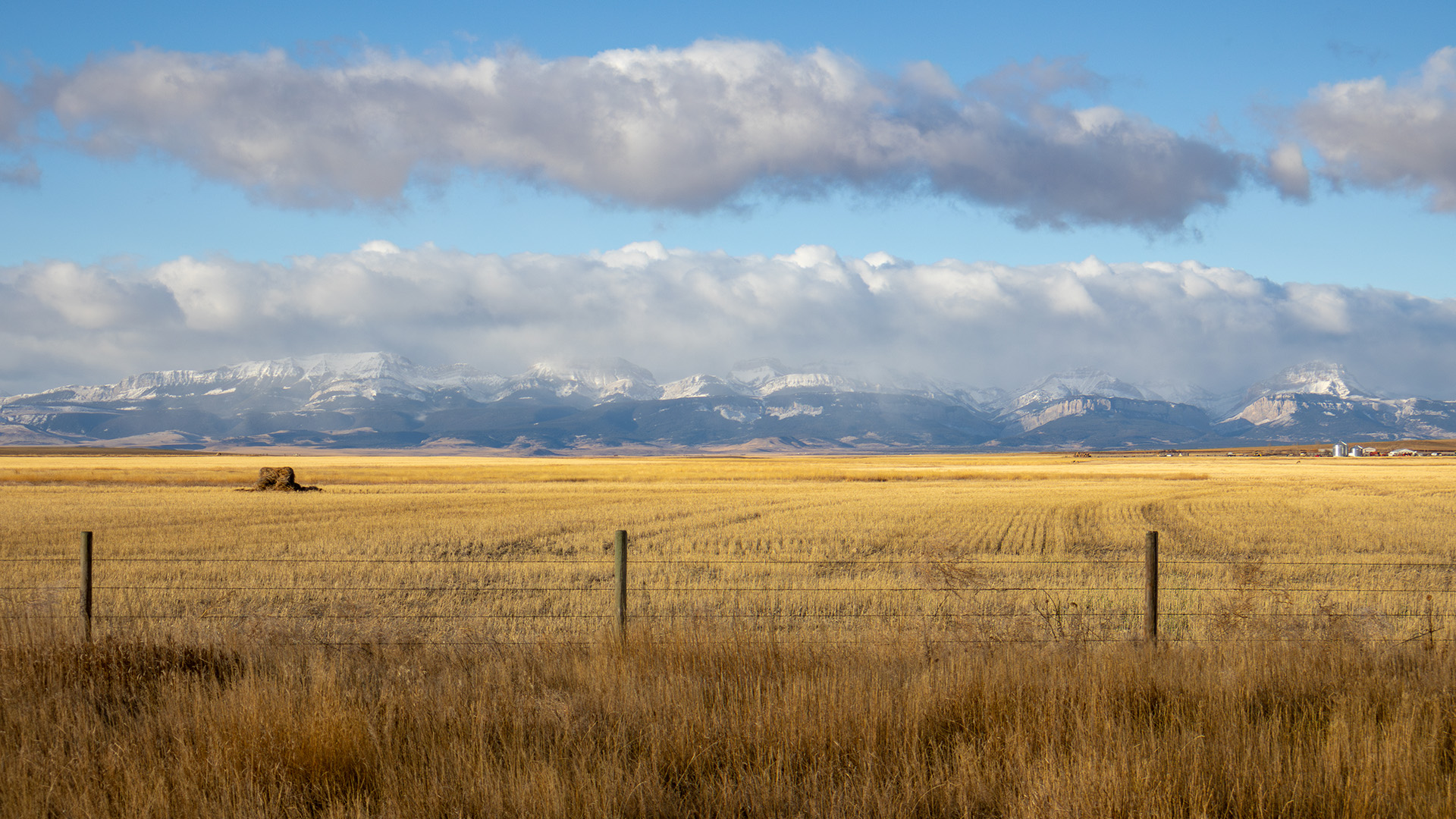
For the last couple of years, corner crossing has been one of the hottest topics in the West.
Ever since the landmark court decision out of the 10th Circuit, hunters across the country have celebrated what many viewed as a major victory for public land access. The idea is simple enough. If two corners of public land touch at a single point, should a hunter be allowed to move from one parcel to the other without setting foot on the surrounding private property?
Simple question. Not-so-simple answer.
While neighboring states have spent years debating the issue, Montana is now finding itself squarely in the middle of the conversation.
As recently as November 5, 2025, Montana Fish, Wildlife and Parks issued a statement making it clear that corner crossing remains unlawful in Montana.
“Corner crossing remains unlawful in Montana, and Montanans should continue to obtain permission from the adjoining landowners before crossing corners from one piece of public land to another,” Director Christy Clark stated at the time. “Wardens will continue to report corner crossing cases to local county attorneys to exercise their prosecutorial discretion.”
That position remains in place today, but the pressure surrounding the issue continues to build.
Last week, Montana’s Private Lands/Public Wildlife Committee spent considerable time discussing corner crossing ahead of an upcoming Fish, Wildlife and Parks Commission meeting. The timing was noteworthy. Just one day earlier, Lt. Gov. Kristen Juras presented to a legislative committee and described corner crossing as an illegal act because it involves trespassing through the airspace above private property.
Whether you agree with that interpretation or not, one thing is clear: Montana is actively trying to figure out what comes next.
One of the more interesting ideas discussed during the committee meeting involved creating a new access program within Montana’s larger Block Management system. Most hunters are already familiar with Type I and Type II Block Management Areas.
Type I BMAs generally allow landowners to administer access themselves, like Wyoming’s Walk-in Access Programs. Type II BMAs operate through a reservation or management system. No matter the type, these often provide access to both private lands and public lands that would otherwise be inaccessible.
The concept floated at last week’s meeting would create another pathway that specifically addresses corner-crossing situations and access to isolated public parcels within the FWP access programs.
The reality is that many Montana landowners have made it clear they are unhappy with the prospect of unrestricted corner crossing. Some have reportedly threatened to withdraw their properties from Block Management if access rules change in ways they view as infringing on their private property rights.
And whether hunters like hearing that or not, it’s a concern worth paying attention to.
The temptation is to look at this issue as a simple math problem. Roughly 900,000 acres of public land in Montana are estimated to be inaccessible today, but could potentially be reached through corner crossing.
But depending on the year, Montana’s Block Management Program provides access to somewhere between six and seven million acres of hunting opportunity. That makes the equation a little more complicated.
If unrestricted corner crossing resulted in even a modest reduction in landowner participation, the hunting community could find itself gaining access in one place while losing it somewhere else.
The danger is assuming that every access issue exists in a vacuum and it doesn’t because positive relationships with landowners matter.
That’s not a popular thing to say in an era where every discussion seems to require choosing a side and digging in. But wildlife management has always been a balancing act between public resources and private landowners. Hunters may ultimately win the legal argument surrounding corner crossing, but if that victory creates long-term resentment among landowners who currently allow access, the net result could actually be fewer places to hunt.
This is in no way an argument against public access. It’s an argument for being thoughtful about how hunters pursue it.
The truth is that hunters need allies. Wildlife agencies need both groups at the table if they’re going to successfully manage wildlife populations and maintain access opportunities.
Burning those bridges with landowners has never been an effective long-term strategy.
Every Hunter Represents All Hunters
As this debate continues, every hunter can police one thing: their own behavior.
Every fall, thousands of hunters pull through ranch country on their way to public land. Every one of those interactions leaves an impression.
Sometimes it’s the guy who drives down a muddy two-track and leaves ruts that last until spring. Sometimes it’s the hunter who packs out his trash and picks up someone else’s while he’s at it. Other times it’s the hunter who stops and helps fix a fence even though he doesn’t have permission to hunt that ranch.
Those little things matter more than most of us probably realize.
Public access battles will continue. Corner crossing discussions aren’t going away anytime soon in Montana or elsewhere across the West. Courts will weigh in. Legislatures will weigh in. Wildlife commissions will weigh in.
But while those debates play out, hunters still have a responsibility to put their best foot forward.
Do things right when nobody is looking. Treat people with respect even when you disagree with them. Leave places better than you found them.
Because in the long run, access isn’t built solely through court decisions.
A lot of it is built through trust.


I found the comment from a Lt Gov hilarious on airspace over private land. When she should know full and well, airspace is NOT owned in the least. It is all public and controlled with regulations under the DOTs department of the FAA. Even the “uncontrolled” space is covered with regulations. Noone land owner anywhere owns the air over their property. Sorry.
If Lt Gov Juras postulates corner crossing is “an illegal act because it involves trespassing through the airspace above private property”, then its corollary must also be true; landowners are illegally controlling some minute portion of the airspace over public lands at those same corners. Where are the lawsuits and prosecutions?
If landowners want to pull their land that is block management then let them. They get paid for the access to that land. If hunters do not have access to that then why do they get that payment. That’s what I never understood about BLM and federal land that is landlocked by private. Why is that property owner paid for that land that the PEOPLE that pay for it have no access to it.
That’s a nice spin and scare tactic to try and use us to stop getting access to our public land. Has this happened in the states that do allow Corona crossing? Nope!. Nice try guys!
Agree
If the property owner owns the “air Space” over their property, that would mean if you walked on public land along private land ANYWARE and simply stuck your arm out over the property line it would be trust passing.
Can you imagine walking on a sidewalk in town stick your arm out over someone’s property line and getting arrested? SAME THING. They only own the dirt.
I know quite a few ranchers. Many of them are nice folks but there are a growing number of them who give ranching a bad name. The actions of one rancher affect them all. Perhaps they should police their own and stop thinking they own and control the entire West. There have been movements abroad to stop grazing on public lands. If ranchers wish to continue to graze public land, maybe they should treat the hunting public with some respect and get away from issues like corner crossing as if it were really trespass. Then made hunters would vote to continue to allow public land grazing. And by the way, how far into outer space do ranchers own the airspace? Let’s get serious folks, if hunters and ranching are to continue into the future, we probably ought to learn to get along and get away from ridiculous issues like this subject.
I’m sure there’s a link to landowner tags too which they make money on because they hold elk so in essence they are corralling the elk on “their” land.