 Eastmans' Official Blog | Mule Deer, Antelope, Elk Hunting and Bowhunting Magazine | Eastmans' Hunting Journals
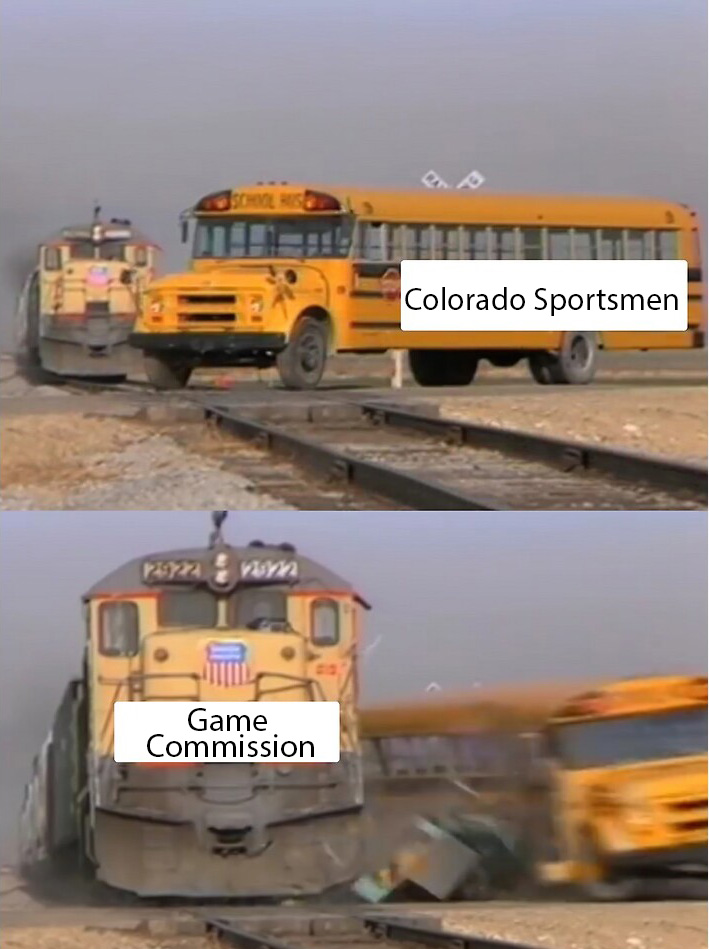
Colorado Game Commission is a runaway, anti-hunting train.
I recently wrote a blog detailing how Gov. Jared Polis’s appointments may be changing the character and direction of the Colorado Parks and Wildlife Commission. My examples came primarily from the July 2026 Commission meeting.
I just finished watching the September 2026 meeting …
Things have gotten worse—and the problems are becoming increasingly difficult to ignore.
Newly appointed commissioners are disrupting the normal process of conducting Commission business. Issues are being pushed forward before CPW staff members have adequate time to research them and make recommendations, before other commissioners have time to study that information, and before public stakeholders have an opportunity to understand and comment on what is being proposed.
In some cases, commissioners have thrown out very premature motions that the Chairman then had to deal with. Once a motion has been made, with the support of other like-minded commissioners, it can then be forced to a vote—regardless of how premature, uninformed or ill-advised it may be.
Everyone Is Taking Notice
General public comments, which normally include passionate pleas concerning things such as; wolves, mountain lions and hunting, took a very different direction at this meeting. Much of the discussion centered on the chaotic nature of the Commission’s proceedings, the apparent disregard for CPW staff recommendations and concerns about whether proper procedures are being followed.
Here are my paraphrases of comments made during the meeting. I listened to these comments multiple times and transcribed them as accurately as possible.
Elected Officials
Colorado Sen. Rod Pelton said his disappointment with the previous two days was an understatement. He described some of the behavior as unacceptable and praised the CPW director, staff and biologists as “top shelf.” He said their recommendations are sometimes being ignored and that he finds that unacceptable. Pelton also reminded commissioners that they are supposed to represent different segments of Colorado—not simply one person who happens to sit on the first floor of the State Capitol, (referring to Gov. Polis). He said it was evident to him that Gov. Polis had played a major role in the meeting and that this was out of place.
Colorado Rep. Ty Winter agreed with Pelton. He described having to go on a “nine-month apology tour” when he returns to his district and talks with people about attacks on their way of life and heritage. He said that too often at the Capitol, politics take precedence over people when it comes to wildlife. His message to the Commission was clear: Colorado is not just Denver and Boulder.
County Commissioner R.J. Jolly described the handling of the prairie dog petition as very unprofessional and said it could appear nefarious to some observers. He also criticized moving forward with rulemaking on a matter where commissioners had not been allowed adequate discussion before a vote.
County Commissioner Tony Hass raised concern that people directly affected by the issue had not been given an opportunity to participate.
County Commissioner Felix Lopez emphasized the importance of allowing stakeholders an opportunity to comment. He said failing to provide that opportunity takes away the right provided by the Constitution. Lopez also stressed the need for order and reminded commissioners that they are there to serve all of Colorado.
Public Comments Summary
One member of the public returned to the furbearer bag-limit decision from the July meeting. The staff recommendation was for a daily furbearer limit of 15 animals per species per day, and Commissioner Niemiec instead made a motion for a limit of just two. His criticism was blunt: No science, no biology, no opportunity for public comment, no rational explanation for it, she just pulled a number out of thin air and made a motion. His concern was also the process. The public had been presented with two options. Instead, a third option was introduced—a daily limit of two—and ultimately passed. The public had not been given an opportunity to comment on the new option before the Commission voted on it.
Another speaker questioned why issues were being taken out of their normal regulatory sequence and cited the prairie dog petition as an example. He said it was brought forward under the guise of a crisis even though CPW testimony indicated that no crisis existed. His conclusion was troubling: the impression is that the Commission is being driven toward a political outcome rather than toward policy based on science and stakeholder input.
Another member highlighted that biologists’ recommendations are being ignored and the testimony from many sportsmen and stakeholders is being ignored.
One speaker suggested that the rush on some issues may be related to the approaching end of Gov. Polis’s term.
Finally, another speaker noted with frustration that this continues to be a toxic environment.
A Commission Losing Its Way?
The Colorado Parks and Wildlife Commission is supposed to make difficult wildlife-management decisions using science, professional expertise, public input and the long-term interests of Colorado’s wildlife.
CPW has professional biologists, wildlife managers and officers who spend their careers studying Colorado’s wildlife. The Commission has the authority to disagree with them, but when their recommendations are repeatedly disregarded, when proposals are rushed forward, and when stakeholders don’t have an opportunity to comment on the actual proposal being voted on, the public has every right to ask why.
The Colorado Parks and Wildlife Commission has a serious public-trust problem.
Gov. Polis appointed the commissioners who now sit on the Commission. Some of his recent appointees seem to be increasingly focused on advancing an ideological agenda rather than following the traditional CPW model of science, professional expertise, public involvement and sound wildlife management.
So, the question I asked in Part 1 remains:
Is Gov. Jared Polis Intentionally Derailing the Colorado Parks and Wildlife Commission?
After the September meeting, I have even more questions—and fewer reasons to dismiss the possibility.


Colorado hunters don’t spend any. ENERGY fighting the lives in their state
They spend all their energy worrying about how many tags non-resident hunters get
that’s why the wolf initiative got through the ballot box and why they don’t fight their state politicians. all they do is whine about non-residents getting any tags. then they want us to help them fight after they’ve let the Libs take over their state
Problem is the sportsman are the minority and more people want to feed animals in their backyards and not have any animals killed by sportsman
I thank the good Lord every day that I don’t live in Colofornia.