 Eastmans' Official Blog | Mule Deer, Antelope, Elk Hunting and Bowhunting Magazine | Eastmans' Hunting Journals
Written by: Brandon Moss
Many western states, including Montana have had an abnormally warm and dry winter this past year. Don’t remember too many days where I had to tell the dogs, “It’s too cold to go out today.” This resulted in a slightly different off-season, which allowed for a lot of days exercising dogs and running into wild birds. It’s always a bonus when you’re able to get the dogs into wild birds in the off-season. But what do you do if you don’t have quick access to wild birds, or when it’s time to give them a rest during breeding season, nesting season, and when the chicks are too young to fly well? You still take the dogs out — just leave the wild birds out of the equation.
The off-season isn’t just the off-season — from e-scouting, to steady dog conditioning, to cleaning up all that gear that was so well used. The off-season is vitally important to a prosperous and successful upcoming fall adventure. Putting in the effort during the non-hunting months sets everything up for when the wild birds are back in action. Many states have laws regarding running dogs on wild birds. States like Montana provide wild birds a stress free period from somewhere around April 1st till August 1st. This takes as much human pressure off the birds allowing them to go through the breeding, nesting, and chick seasons as naturally as possible. Very important for optimal bird reproduction year to year.
When it comes to the off season, there are two main aspects for getting prepared for the next bird season. Ok, more like four. Yourself, your dog or dogs, finding and exploring hunting areas, and your gear. However, we are going to focus just on the greatest hunting partners anyone could ask for, our dogs. Keep in mind there is nothing that can kill the joy of bird hunting faster than an untrained or unruly, out-of-shape dog.
One of my favorite sayings, regarding off-season training is, “Your bird dog is made in August.” The truth of the matter is it starts months before that, but August is the optimal month to start training on wild birds. There’s no better substitute for improving your wild bird dog than on wild birds themselves. However, accessing the birds takes a substantial amount of time and requires living in an area where you have good populations available, which is a rarity. With time and location restrictions, liberated or released birds help your bird dog hold its edge — or even regain it. Taking time to get your dog out on whatever birds you have access to will ultimately carry over to the success you’re looking for come fall.
The most common reason I’ve heard for not training on birds is, “I don’t know where to buy birds or I don’t have equipment to train with.” Wrong, these excuses and many others are easily able to be overcome with just a little bit of effort. There is a good chance someone within a reasonable distance of you is raising birds. And most likely, you’re already seeing training birds every day — every city and rural area has an abundance of them flying around, which are pigeons.
I have a few ways I’ve been able to utilize those flying daily dog training reminders in my area, which should cover most locations. First, search local critter catchers and most likely there will be a couple of small businesses who offer pigeon removal. When I was training full time, I kept in constant contact with a local pest control business to buy whatever birds they had and I needed. Many times this method would suffice for all the training birds needed — a double bonus for whoever was catching them as well. They’d get paid to trap the birds and then sell them to someone like myself. Typically these birds worked well for training as they were strong flyers and never had human contact before. Most were eager to evade the training session as quickly as they could. I didn’t have to worry about birds that had been raised in captivity and possibly didn’t fly as well as I would like to see. Once given just a little bit of wiggle room they were gone.
Another way I would access birds was to pay some high school-aged kids to go out and catch them for me. Four to five dollars a bird was a good deal for me, fun money for them, and they thoroughly enjoyed it. I can’t remember how many times I’d get a call or text asking if I needed
birds. All they needed was a flashlight and a fishing net, sometimes a ladder. Local farmers and ranchers were more than willing to let the youngsters raid their barns for pigeons. And I’m not going to lie — there were plenty of times I enjoyed going out with my own kids to hunt down training birds, which is yet another way to get the job done. The best technique is to find where the birds were roosting, blind them with a flashlight, and catch them as quickly as you safely could. I say safely because many times I was way up a ladder, one leg on, and holding on to the rafters with one hand for dear life, swinging that fishing net before the birds spooked. To do it effectively you need two people there, with your partner holding the flashlight. Better yet make your partner do the sketchy work, and you hold the light.
Now we have birds, what’s next? Finding a location to utilize for dog training, best if you are able to fire shotguns there. It doesn’t take large tracts of land to train a dog on liberated birds. Utilize what you have in your area. Local trap and shooting ranges typically will allow members to use the grounds for training on non shooting days.
Next is having the equipment for training. Really the only true necessity is a check cord to control your dog during training. The last thing you want is to allow your dog to run free and catch planted birds, before they are properly trained and you have the confidence in them to let them run free.
Automatic bird launchers — or any bird launcher — are a great bonus to have, but not necessary. I do think you will get a better training session with a remote bird launcher but they can be pricey. There are methods which allow you to just put the birds out there, with no trap or launcher needed. A quick YouTube search will show you how to put birds to sleep and plant them in the field.
Truthfully, there are very few excuses for not getting your dogs out in the off-season, and doing so is extremely important for success come fall.
I will fully admit how lucky I am to have wild birds, readily available to me, within a short distance of my home. From August 1st through March 31st, I’m able to put great wild bird numbers in front of my dogs — a rare blessing I know. If I didn’t have this, I’d be training with whatever birds I could get my hands on.
Lastly, look into the possibility of local training clubs in your area. Most have the resources you need for training and can offer insight on locally available birds. Hunting and bird dogs can be great for social interaction and these clubs give you that opportunity, and can often come with a few individuals who have a deep knowledge of bird dog training.
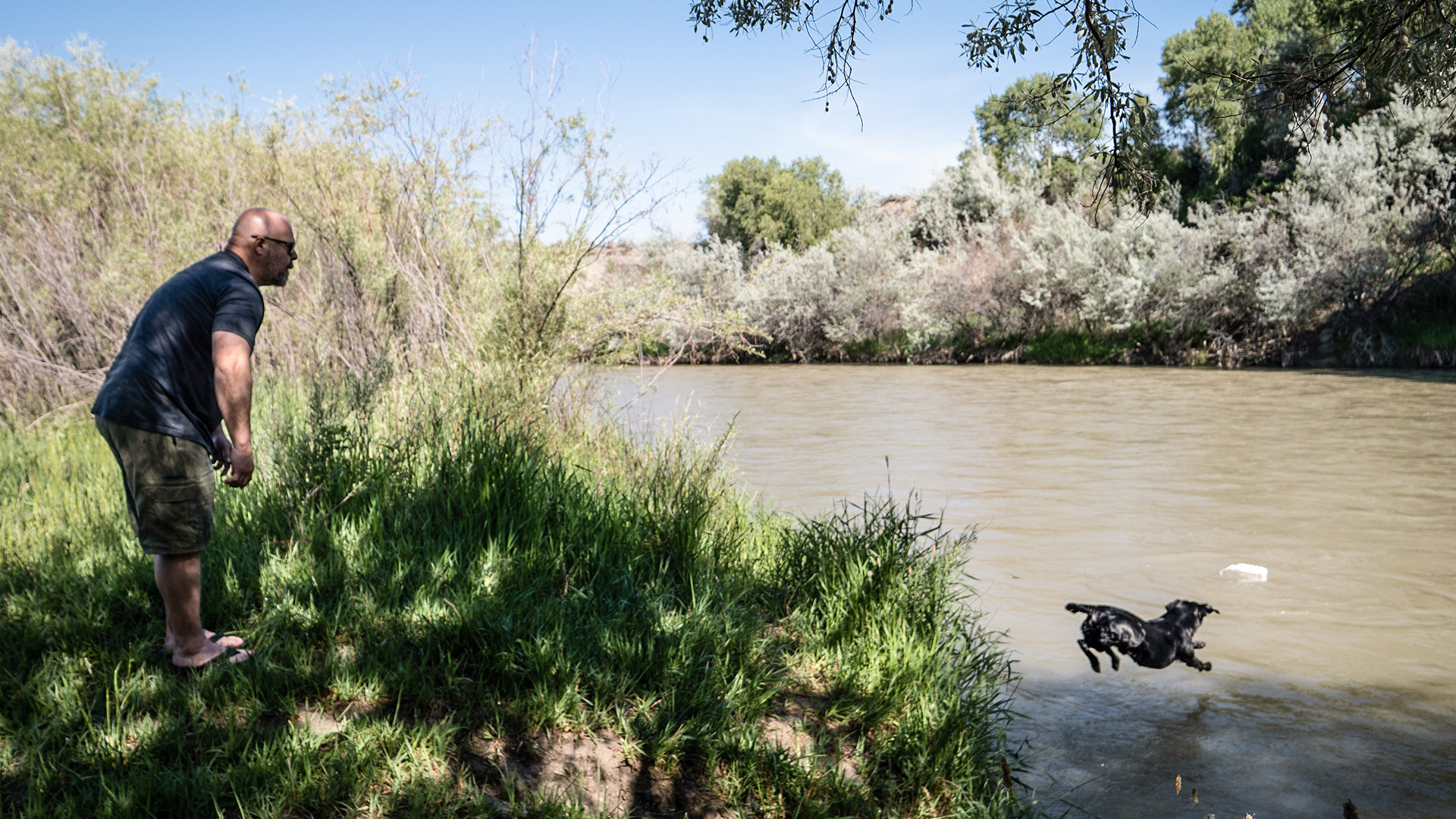
Aside from bird training, conditioning is just as important and overlooked a lot of the time. We have full blown, four legged athletes that accompany us in the field and need preparation to maximize their abilities in the field. Truth be told, most of us could use the exercise as well, even more so for many of us.
Imagine your favorite professional athlete, and then imagine what they would be like if they sat on the couch from the final day of the last season, then jumped right into games the next season. The first five minutes of the game would be great but it would be all downhill after that and it would be doubtful they’d even be able to finish the game. The same goes for our beloved bird dogs.
What I like to do is find ways to get them good exercise from late spring through the summer. Remember, my upland season starts September 1st and I can legally start training dogs on wild birds August 1st. So, I find ways to let them get energy out and stay active April-July. Then come August it’s field days, letting them run. I’ve already done the bird training, so now it’s time to get them in shape.
I start off with every other day or depending, one day on, two days off, then move to every other day. This next part is overlooked and very important, I found out the hard way. It’s important once your dog is in decent shape, to run them more than one day in a row. Most of your hunting trips are consecutive days in a row. Dogs need to be exposed to exercising and running two, three, or more days in a row.
In my younger years I thought it was sufficient to run dogs every other day and best for them to get rest days, which is still true. But once I started to run them multiple days, I started to get injuries. Also, dogs pads need to have time to adjust to ground contact and build up a resistance. If you really want to maximize your dog’s pads and not worry about tearing them up, place boots on them from day one, but I never do it. Sounds good in theory but my results haven’t been great.
Train hard, get both you and your dog in shape and fully enjoy this upcoming upland bird hunting season.