 Eastmans' Official Blog | Mule Deer, Antelope, Elk Hunting and Bowhunting Magazine | Eastmans' Hunting Journals
Well, its official, Idaho has made the use of drones, thermal imaging, and transmitting cameras illegal for hunting or scouting for BIG GAME ANIMALS or GAME BIRDS from August 30 to December 31. I have written about these proposed changes from the HAT Committee before but now they are finalized. These new rules (IDAPA Rule 13.01.08.410) will be hard to enforce the way they are written but it is up to us as hunters to hold each other accountable.
These rules specifically target the use of these items for the hunting or scouting of big game. For the Idaho wolf hunters, if you’re using the night visor, thermals and transmitting trail cameras specifically for wolves, you should be good. If you are doing it during the prohibited period, be prepared to answer questions if stopped by Game Wardens. I would recommend not having a big game tag in your pocket while wolf hunting if you are using these items. That will hopefully show that you are only out there pursuing wolves and have no intention of hunting for big game.
With the Idaho deer, elk and pronghorn draw approaching, let’s look at some harvest statistics for the 2025 season.
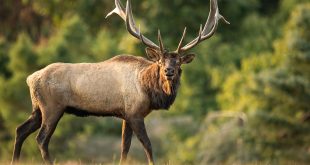
The elk harvest for 2025 was up from 2024. There were 21,505 elk harvested in 2025 compared to the 20,996 elk harvested in 2024. The 2025 harvest was slightly above the 10-year average of 21,249. There were 13,524 elk harvested during the 2025 general season with 7,981 taken during controlled hunts. 13,263 of those elk taken were antlered bulls and 8,242 were antlerless. Over the last 10 years, 2023 was the lowest harvest at 18,568 elk and the highest was in 2020 at 22,776 elk. The success rate for general season elk was 18% with controlled hunts being 40%.
For mule deer, the harvest numbers were still below the 10-year average (25,452) at 24,589 in 2025. Those numbers are a little misleading because of the year 2016. In 2016 (the high harvest in the past 10 years), there were 37,070 mule deer taken. The lowest year was in 2023 after a harsh winter when only 18,329 mule deer were taken. The harvest was up though from the 20,908 taken in 2024. Of those harvested in 2025, 13,302 were antlered and 6,400 were antlerless. There were 18,237 (37% success rate) mule deer taken during the general hunts and 1,465 (40% success rate) during controlled hunts.
For whitetail deer, the numbers were also below the 10-year average at 19,702 taken in 2025. The Clearwater Region had an outbreak of EHD (Epizootic Hemorrhagic Disease) which is almost always fatal for deer. A large portion of that herd did not make it through that outbreak which could explain the low harvest numbers. The whitetail 10-year average is 22,542 with a high harvest in 2017 at 26,503 deer and a low of 19,182 deer taken in 2022. The whitetail harvest numbers have been stable but lower than the 10-year average over the 5 years.
These numbers can be broken down even further if you look at the individual hunt units and specific hunts. If you are looking to apply for a controlled hunt, check out the Eastmans MRS (https://eastmans.com/hunt-research/) and the Idaho Fish and Game harvest stats for your specific hunt (https://idfg.idaho.gov/ifwis/huntplanner/stats/)
Do your research before applying for a tag. That could be the difference between a successful hunt and going home eating tag soup.