 Eastmans' Official Blog | Mule Deer, Antelope, Elk Hunting and Bowhunting Magazine | Eastmans' Hunting Journals
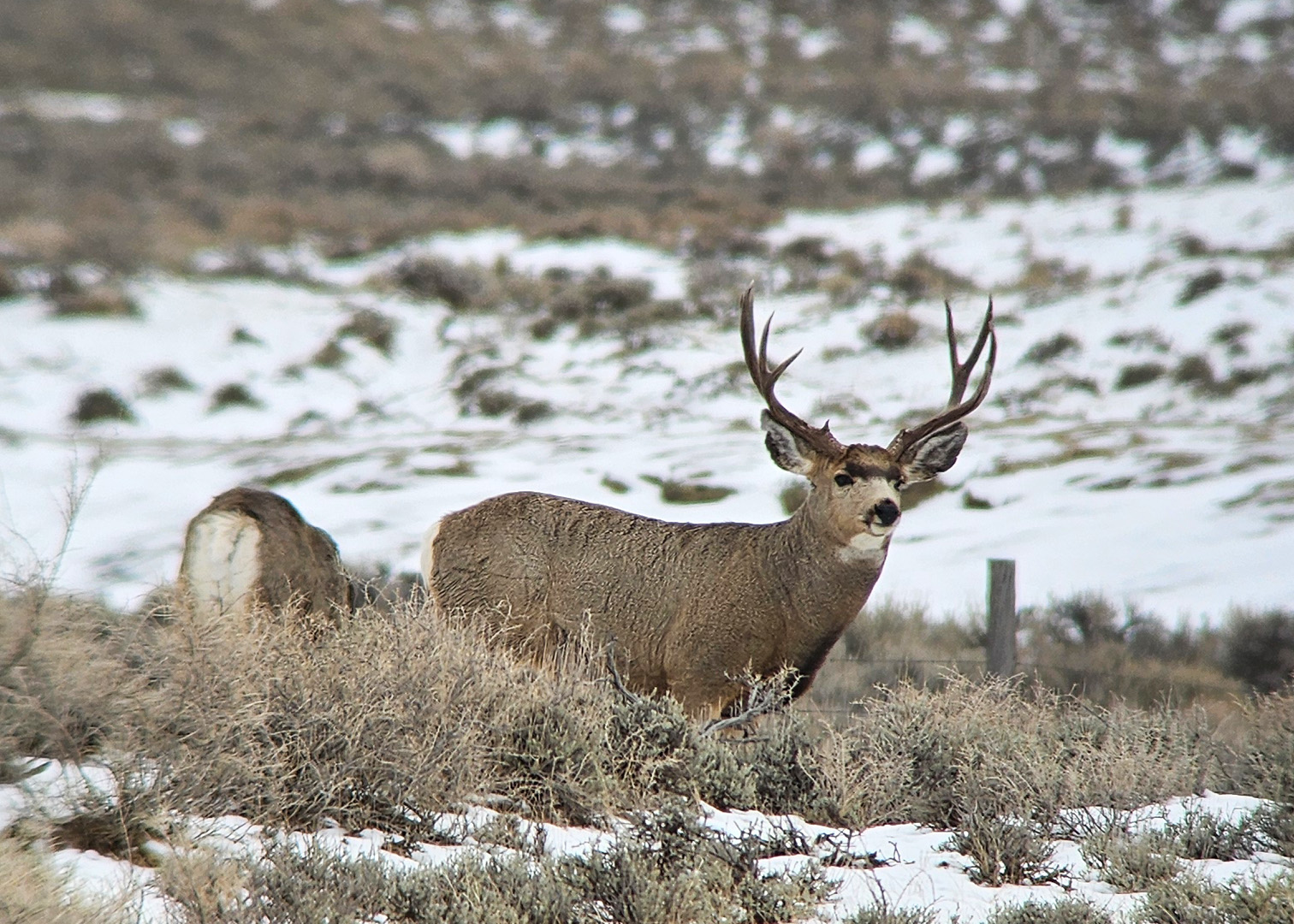
Mild winter could equal tough times ahead for Wyoming mule deer and pronghorns.
Wyoming’s traditionally cold and snowy winter has been virtually nonexistent below about 9,000 feet this year. Last weekend I travelled across a large swath of the state’s deer and pronghorn winter range. I saw very healthy deer and pronghorn but zero snow and temps were in the 50’s. While this is great for our ungulate herds in the moment it does not bode well for the coming weeks when spring precipitation aids ‘green up” and allows deer, elk and pronghorn access to fresh nutrients missing from winter diets.
Fellow hunters, biologists and game wardens I’ve visited with have all remarked how healthy the ungulate herds look at the moment but all have expressed a sense of foreboding about the lack of moisture. While snowpack in most mountain ranges, especially those in western Wyoming is at or above 100% across the board, which bodes well for summer groceries, the foothills and plains where our herds winter are brown and sere right now. In fact, wildfire danger is sitting at the moderate to high range in many places… not what we want to see in late-February.
While only God knows what the weeks to come have in store for moisture I’m betting that we’ll get what we need in the months of March, April and May as these are traditionally the “wettest” months of each year, especially April and May.
With Wyoming’s herds in superb physical condition a bit of moisture to make that green growth pop could spell tremendous fawn recruitment, antler/horn growth and help our rebounding deer and pronghorn herds to take another step toward full recovery from lagging population objectives.
While none of us can do a thing about the weather we can help our deer and elk herds especially by staying away from their winter ranges and leaving our “shed hunting” until May or June when animals have moved on from their winter ranges. I know that’s a tough thing for many folks to swallow as cabin fever hits hard this time of year and the urge to hunt up some “brown gold” grows overwhelming but by letting our deer and elk winter out unmolested we are doing the best thing for them.
While we’re talking about helping… consider taking up predator hunting. Every coyote you take off the landscape means several fawns stand a better chance at surviving to adulthood. Just be aware of minimizing disturbance to wintering deer and elk while chasing coyotes. Also, buy and fill a spring black bear tag on a MALE black bear! Males do not count against quotas meaning seasons can run their full length and we can harvest as many bears as possible. Bears are the number one predator of fawns and calves in the spring, and while we can do nothing about managing grizzlies we do have a hand to play in making sure black bear numbers are held in check.
“March is a green, muddy month down below…”
Maybe not this year but here’s to hoping old Bear Claw is right for spring 2026!